Commercial Video Production: How to Plan a High-ROI Shoot
For marketing leaders and creative directors, commissioning a commercial video shoot represents a significant allocation of marketing spend. When executed strategically, commercial video production delivers compounding returns—driving organic search visibility, lifting paid acquisition conversion rates, accelerating B2B sales cycles, and solidifying brand equity.
Yet many commercial shoots underperform their potential ROI. Budgets leak into administrative agency markups, shoot days are structured inefficiently, and creative concepts fail to translate into tangible commercial outcomes.
At Studio 204, we advocate for a direct-to-production model. By stripping away middleman markups and focusing on modular content capture, marketing teams can produce broadcast-calibre assets while protecting their bottom line. Here is how to plan, scope, and execute high-ROI commercial video production from initial concept through final delivery.
What Drives the Cost of Commercial Video Production?
Understanding where your budget actually goes is the first step toward safeguarding return on investment. In standard agency arrangements, 30% to 50% of the total budget frequently funds client-service overhead, account management layers, and secondary markups on outsourced crew.
When partnering directly with a dedicated production studio, your capital goes straight onto the screen. Here are the core variables that dictate your overall commercial video budget:
- Pre-Production Planning: Concept development, scriptwriting, storyboarding, site scouting, casting, and scheduling.
- Production Crew and Equipment: Director, director of photography (DP), gaffer, sound recordist, and camera assistants, along with cinema-grade cameras, lighting packages, and grip equipment.
- Talent and Wardrobe: Professional actors, voiceover talent, and styling teams.
- Locations and Permitting: Studio rentals, site fees, municipal permits, and liability insurance.
- Post-Production: Offline editing, sound design, colour grading, visual effects (VFX), motion graphics, and multi-format mastering.
To optimise your budget, focus on efficiency rather than cutting corners on technical crew or audio capture. High-end lighting and pristine sound are non-negotiable markers of commercial authority.
How to Scope Your Project for Maximum Return on Investment
High-ROI video planning starts before a single camera is booked. Scoping should always be anchored to commercial objectives rather than aesthetic whims.
1. Build an Asset Matrix Early
Never plan a shoot for a single 30-second spot. The most cost-effective shoots are designed as content harvesting engines. Prior to production, establish an asset matrix detailing every deliverable needed across your marketing funnel:
- Top-of-Funnel: High-impact 15-second and 30-second cutdowns formatted in 9:16 and 1:1 for paid social.
- Middle-of-Funnel: A 60-second to 90-second brand overview for the website hero section.
- Bottom-of-Funnel: Focused 30-second product feature spotlights, testimonial vignettes, and technical demonstrations for sales enablement.
- Stills Capture: High-resolution commercial stills captured between setups using matched lighting rigs.
Capturing matched photography alongside video eliminates the need to book separate photo shoots, saving thousands of dollars in talent, location, and styling costs.
2. Define the Distribution Plan First
Creative parameters should follow your media plan. If 70% of your media spend will be deployed on vertical social channels, framing must account for vertical safe zones during filming. Communicate your aspect ratios (16:9 widescreen, 9:16 vertical, 4:5 social) during pre-production so your director of photography can monitor framing simultaneously.
Sector-Specific Considerations: Corporate, Food & Beverage, and Manufacturing
Commercial video production demands different tactical approaches depending on your operating sector. We frequently see productions stumble when creative teams fail to account for industry-specific operational realities.
Manufacturing and Industrial Facilities
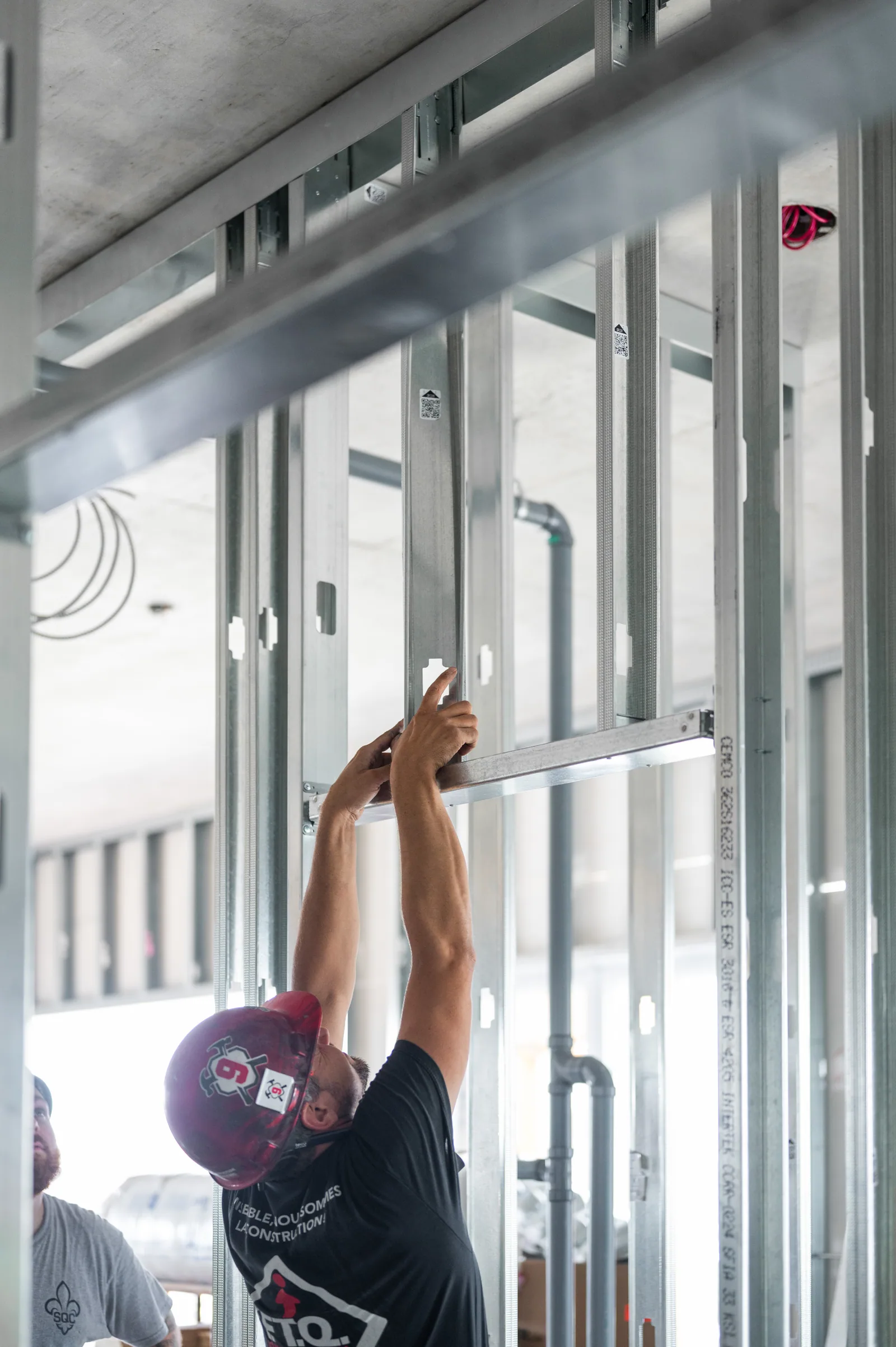
Filming in operational manufacturing plants requires stringent pre-production logistics. Crew safety protocols, personal protective equipment (PPE), and plant manager clearances must be integrated into the call sheet. High-ROI manufacturing shoots focus on:
- Capturing genuine workflow precision and clean-room or assembly line operations without disrupting active shifts.
- Showcasing proprietary engineering capabilities through dynamic camera movement and macro detail work.
- Highlighting company culture and workforce safety standards to serve double duty for recruitment marketing.
Food and Beverage Brands
In food and beverage, viewer appetite appeal directly dictates commercial conversion. Ambient kitchen lighting is rarely sufficient; lighting must be sculpted to accentuate texture, moisture, and colour.
- Food Styling: Budgeting for an experienced food stylist ensures ingredients hold their visual appeal under high-output studio lights.
- High-Speed Capture: Filming pours, sizzles, and macro preparation at high frame rates (120fps to 240fps) elevates consumer perception.
- Fast Pacing: Digital audiences decide within 1.5 seconds whether a food commercial is appetizing—front-load the hero product.
Corporate and B2B Organizations
Corporate commercials often suffer from generic talking-head fatigue. To stand out, B2B brands need authentic narratives underpinned by cinematic production values.
- Executive Preparation: Brief executives thoroughly with talking-point frameworks rather than rigid, memorised scripts.
- Environmental Context: Film interviews within modern, active workspaces rather than sterile boardroom setups.
- B-Roll Specificity: Replace generic keyboard typing shots with authentic problem-solving interactions, client reviews, or proprietary software demonstrations.
Pre-Production Checklist for Commercial Video Production
Flawless shoot days are built on disciplined pre-production. Use this checklist during your planning sprint to avoid costly delays:
- Creative Brief Approved: Value proposition, audience persona, core messaging, and clear calls to action (CTAs) documented.
- Script and Shot List Locked: Two-column audiovisual script matched with detailed camera shot lists and lighting references.
- Location Recce Completed: Electrical capacity verified, ambient acoustic interference checked, and parking/load-in paths confirmed.
- Talent Contracted: Standard commercial buyout agreements signed for multi-year digital and broadcast rights.
- Production Schedule Distributed: Minute-by-minute call sheets outlining arrival times, lighting setups, meal breaks, and wrap times.
For a deeper look into structuring your shoot, explore our commercial video production services and our end-to-end video production workflow.

A 5-Phase Commercial Video Production Timeline
Understanding the realistic milestones of a commercial project prevents compressed timelines that drive up rush fees. A standard high-tier production runs over a 4 to 8-week cycle:
| Phase | Timeline | Primary Deliverables | | :--- | :--- | :--- | | Phase 1: Discovery & Strategy | Week 1–2 | Project brief, creative concepts, budget approval, narrative outlines. | | Phase 2: Pre-Production | Week 2–4 | Script lock, casting, location permits, gear prep, call sheets. | | Phase 3: Production | Week 4–5 | Live filming days, raw audio/video data backup, asset management. | | Phase 4: Post-Production | Week 5–7 | Assembly edit, fine cut, sound engineering, colour grading, motion graphics. | | Phase 5: Delivery & Archiving | Week 7–8 | Master web/broadcast exports, archival storage, social cutdowns. |
How to Measure the Real ROI of Your Commercial Video
To justify your production investment, establish specific metrics tied directly to business results rather than vanity video views:
- Landing Page Conversion Lift: Measure conversion rates on core landing pages with video compared to static variants (A/B testing consistently shows double-digit lifts).
- Click-Through Rate (CTR) and Lower CPC: Benchmark paid campaign performance using custom video creatives against legacy static image ads.
- Sales Enablement Velocity: Track how often sales teams deploy modular case study and capability videos, alongside the impact on sales closing times.
- Blended Brand Search Volume: Monitor lift in branded search queries across organic search in the weeks following your commercial campaign launch.
When planned with commercial intent, video is not a cost centre—it is a long-term revenue engine.

FAQ
How much does commercial video production typically cost?
Commercial video production budgets vary based on scale, running anywhere from $5,000 for a focused, single-day shoot to $30,000+ for multi-day, multi-location productions requiring specialized talent, precision lighting, and extensive post-production. Working directly with a production studio eliminates the 30% to 50% management overhead typically added by creative advertising agencies.
How many videos can we produce from a single shoot day?
With a detailed shot list and disciplined scheduling, a single production day can yield a primary 60-second brand video, two to three 15-second social cutdowns, and matching commercial photography assets. Grouping setups by lighting configuration rather than narrative sequence is the key to maximising single-day output.
Do we need professional actors or should we use our internal team?
For narrative-driven scripts or acting roles, professional talent is strongly recommended; they take direction rapidly and reduce the number of takes required. For corporate, manufacturing, and authentic brand storytelling, real employees, engineers, and leadership often provide greater credibility, provided the director knows how to make non-professionals feel comfortable on camera.
What rights and licensing should we look for in our video contract?
Ensure your production agreement grants full, perpetual commercial buyout rights across all digital channels (web, social, paid digital advertising). If using professional actors or third-party music, check whether licensing terms expire after one or two years to avoid unexpected renewal fees.
Plan Your Next Commercial Shoot with Studio 204
Are you planning a commercial campaign and looking for cinematic production values without bloated agency fees? We work alongside brand leaders and marketing teams to produce high-performing visual assets that move the needle.
Get in touch today to request a custom quote and discuss your upcoming project.
Related on Studio 204